Monday, 1 May 2017

Cramond Island


Cramond Island


We must have passed that junction dozens of times but have always been in too much of a hurry to turn off and explore.  It was always on the to-do list but required so little effort it would always keep for another day.  A simple walk out to Cramond  Island along the causeway across the Forth, it just had to be done.
The causeway is covered at high tide so a little planning was needed but after parking in the village we strolled out to explore the tiny island.
It’s a funny thing about islands, there is always a sense of achievement getting to one, even one as accessible as Cramond.

Three bridges across the Forth


 There have been folk living here since the Mesolithic and probably before, accessing the rich waters of the Forth for fish and shellfish which are still an attraction for waders such a curlew and oystercatchers.


 How long was he living and growing in the rich ooze ...

 ...before he dug him up and opened him up?!


The causeway, erected in wartime as a barrier to shipping makes for an easy stroll out to the tiny outlier that would have been accessible across the mudflats long before the concrete pathway was laid.

Causeway and WWII  defence pylons

A walk round the island affords some great views up and down the firth -west to the three bridges, two road and one rail and east to the islands of Inchmickery and Inchkeith with the volcanic cone of Berwick Law in the distance. (Blog 12th Sept. 2016)

Inchkeith

The abundance of shells along the shore gives a hint of why this spot has always been occupied.


The Romans had a camp here and the famous Cramond lioness sculpture, now in the Museum of Scotland, was pulled out of the mud of the Forth.

Remains of Roman barracks  circa 142 A.D.

 Cramond was where Robert Louis Stevenson in Kidnapped, imagined the House of Shaws to be sited, the home of the hero’s treacherous uncle who later has him abducted on a ship sailing from the pier at Hawes Inn just up the coast (Blog 6th Sept. 2015)
A walk round the village, a look at the Roman ruins and that was Cramond Island ticked off the list but I’m sure I’ll be back.

Cramond Kirk built  in 1656 on the site of the Roman fort
 I'm slowly visiting the accessible islands of the Firth of Forth,  Isle of May and the Bass next!

Thursday, 12 January 2017

Hadden Rig revisited


Participation in a curling tournament brought our previously victorious rink into contention with one from across the border. Skill and luck deserted us and we were defeated by a better side.
Returning from the fray, we were diverted from our usual route giving a lift home to our third - he who plays third in the rink. Curling positions are simple - lead, second, third and skip. There is a paucity of nomenclature in curling. Each team is referred to as a rink and they play against another rink at the ice rink on the ice. Not too many technical terms!

As the rest of us made our way home from defeat, we passed Hadden Rig, site of the Battle of Hadden Rig.

An old trig point  and a line of ash trees break the bleakness of Hadden Rig


In June 1542, Thomas Howard, 3rd Duke of Norfolk, accompanied by Sir Robert Bowes, invaded Scotland at the head of an army of 8,000, including some Scots, the Douglas supporters.
 The Earl of Huntly, and Lord Home met the invaders, and scored a decisive victory.


 The Eildon Hills and Hume Castle from Hadden Rig


Similarly, our curling opponents, from over the border, had Scots in their ranks.

The result of our battle on the ice was more akin to Flodden than Hadden Rig.

Scotland hasn't much of a track record in wins over the Auld Enemy

1297, Stirling Bridge; 1314, Bannockburn; 1967, Wembley; 1990, Murrayfield...... and 1542, Hadden Rig.


Sadly, we were unable to add to that list of victories.

Alas, not today!

Friday, 23 December 2016

On a winter's morn


The solstice is past. The year has turned. The feeling that the days will get longer,the nights shorter and that winter is in retreat is, of course, false. The worst of the weather may still be to come and the lengthening of the daylight hours won't be apparent for many weeks but it feels that we have made it to the real turn of the year.

To celebrate the shortest day, I went out to visit the Duddo Stones. Five of the original seven still stand on a small hillock surrounded by a panorama of all the major hills in the surrounding area. A perfect site to be at one with the elements.

Sunrise at the Duddo Stones

It was, no doubt, the first farmers who erected the stones, four thousand years ago when the seasonal round of the hunter-gatherers changed to a settled permanence and the land and the people were bound together in one place.
Eroded by wind and rain the stones with deep channels, they are sometimes called the "Singing Stones" when the Northumbrian wind whistles past them resonating in their grooved surfaces.

The deeply grooved "singing stones"

There are what appear to be cup marks on two of the uprights like those seen on so many stones in this area. Perhaps they were already on the stones before they were chosen for this henge. 

Cup marks on one of the stones

They could be from an earlier time but recognised by the circle builders as having such significant powers that they incorporated them into their own sacred site. 

All religions tend to use the trappings and symbols of earlier beliefs .
What the belief system of the people who erected the Duddo Stones was, we cannot know but I'm sure the marking of the solstice would have been part of it. 


Maybe they took evergreens into their homes, ate special foods, lit fires and torches and told ancient tales and exchanged gifts to cheer themselves in the darkness of mid-winter. They would have been just like us, glad to be warm and well fed, waiting for the spring and resolving to do better next year.


Sunday, 6 November 2016

Just passing by


Early morning at the beach

This morning, the dog walkers alerted us to the arrival of dolphins off shore at the beach. Sure enough the black fins were breaking the surface out in the bay. Too far out to be sure how many there were and, indeed, whether they were dolphins or their smaller cousins, harbour porpoises.
On balance, I think they were dolphins by the size of their fins.
We often see both coming into the bay. The surfers in their wet suits seem to attract the inquisitive porpoises but a quick appraisal seems to be enough to satisfy them and they are off to chase the fishes again. Porpoises, dolphins, even the occasional minke whale or orca, occur as visitors... just passing by, en route to some other destination.
The winter migrants are arriving every day with long skeins of geese honking across the evening skies. Birds of passage, some stay awhile to refresh themselves for the long journey south, others spend the winter around us before going back in the spring to Scandinavia and Russia but all add to the enjoyment of the change of the seasons.

Leaf change from green to gold and scarlet
This is the time of spectacular sunsets in the west accompanied by the more subtle pinks and grey-blues of the opposite, the zodiacal light of the eastern evening sky.
This is the season of the fungi in the woods that make their own transitory appearance before disappearing into the leaf litter of the forest floor.


On a trip to the North East, I was coming home from walking a tireless cocker spaniel, when I came across a man and a camera equipped with a giant lens. In conversation, he pointed out his quarry - a barred warbler. Another migrant on its way to East Africa, I wouldn't have known what it was and would have described it as an LBJ...a litle brown job, little guessing its amazing journey from Ukraine or Khazakstan to Kenya. A true bird of passage.


We are all birds of passage in one way or another. Everyone wants a place in the sun and some have to journey far to find it.

....A warm, soft vapor fills the air,
And distant sounds seem near,
And above, in the light
Of the star-lit night,
Swift birds of passage wing their flight
Through the dewy atmosphere.
I hear the beat
Of their pinions fleet,
As from the land of snow and sleet
They seek a southern lea.
I hear the cry
Of their voices high
Falling dreamily through the sky,
But their forms I cannot see.

.....This is the cry
Of souls, that high
On toiling, beating pinions, fly,
Seeking a warmer clime,
From their distant flight
Through realms of light
It falls into our world of night,
With the murmuring sound of rhyme.


*  "Birds of Passage"
Henry Wadsworth Longfellow


A place in the early morning winter sun

Friday, 23 September 2016

Darkness be my friend


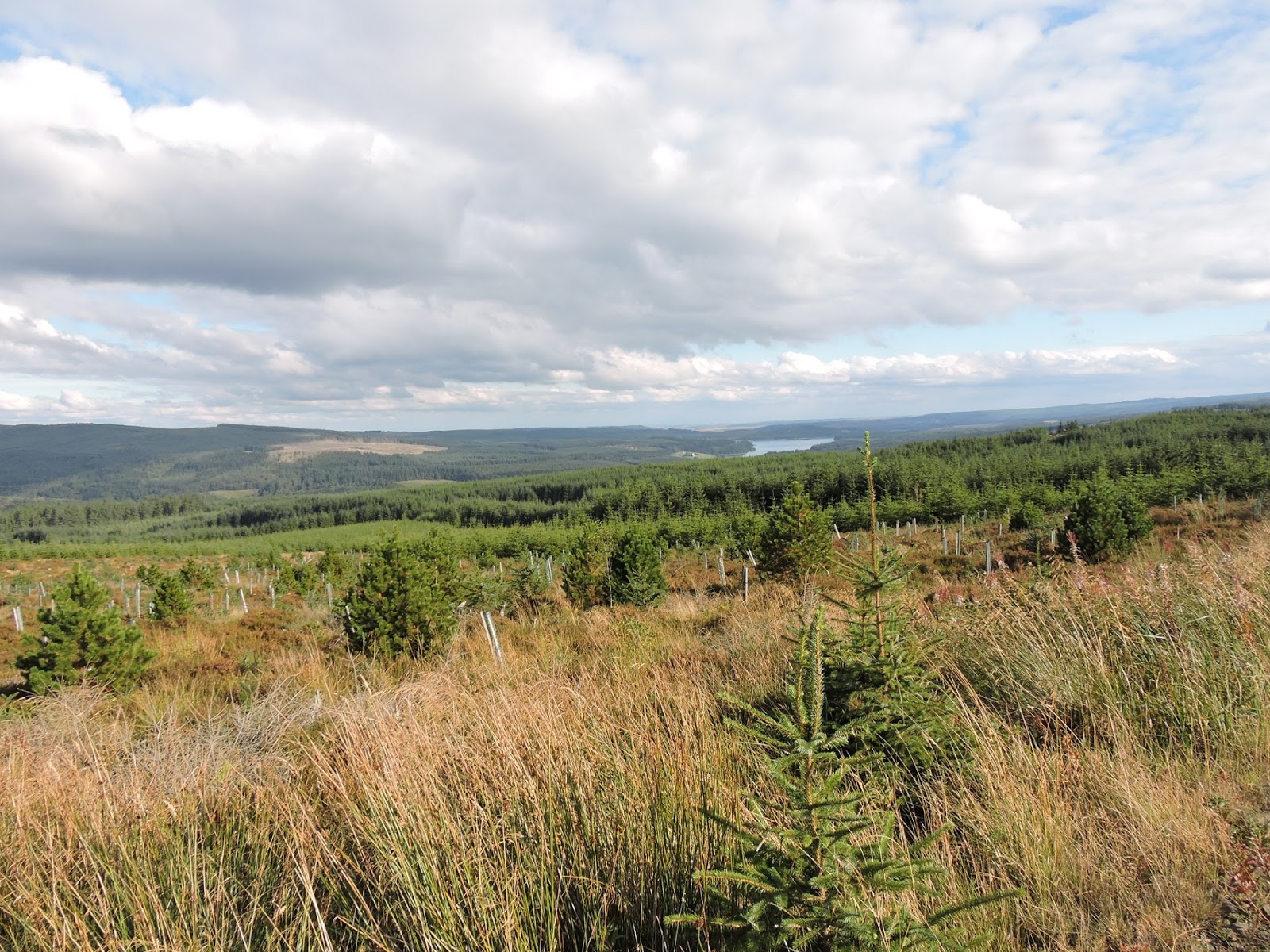
Kielder Observatory in a landscape free of light pollution

As we approached the autumn equinox, the darkening evening skies gave me the notion to seek out the dark skies, away from light pollution, to get a proper view of the night sky.
There are children and probably, adults in this country who have never seen the Milky Way, the "basket handle", arching across above us, the end-on view of our galaxy, our own wee spot in the universe.
Just down the road from us is the Northumberland National Park with its Dark Sky areas.
The whole area is outstandingly beautiful and around Keilder there is a concentration of spots to star gaze.

Skyspace  viewing point

I booked into a great B&B* and settled down to have an evening with the stars. Unfortunately, the observatory was booked for a private event so I was thrown back on my own resources but my hosts made two telescopes available and I had my binoculars.
The gods smiled upon me and the skies cleared for a great view of the southern sky. I am no expert but managed to find the square of Pegasus. Thank goodness for Perseus' mother-in-law, Cassiopeia. The elongated W of her constellation is always easily found and acted as a starting point.
The planets were all too low in the sky for me to see them. At least I think that was why I couldn't find them but as I said I have no expertise only enthusiasm. So, no Mars, Jupiter, Venus or Mercury. None of the old gods were on view.

The next day, full of classical allusions from the heavens, and, being in the area, I drove along the stretch of road that runs, like all Roman roads, in a dead straight line following Hadrian's Wall.


The straight Roman road and wall


At Vindolanda, robbed of its stone over the centuries, you can still catch a glimpse of the might and power of the conquerors. They didn't last. No empires do. Still, the site was occupied for over three hundred years... about six generations or more... a time as long as from the Union of the Parliaments, the creation of Great Britain, until now, except there was no Scotland or England or United Kingdom then. It was Britannia - the most northern province of the Roman Empire. Nations are mere accidents of history


What intrigued me most was a soldier's worn out boot, a caligula, recovered from the rubbish in the ditch and now in the museum. It had once marched along the road I had just driven or stood guard on the fort wall above. Its owner would have shivered in the cold wind from the north and might have looked up at the same stars as I did. There would have been no problem of light pollution for him as he stood on the ramparts.
The legions and cohorts manning the fort seem to have been mostly Gallic. Batavians, Nervians, and Tungrians drawn from what is now the Netherlands and Belgium so the climate wouldn't have been much different to their home but they would have had different names for the constellations. No Greek mythology for them.
Did they see their gods in the skies?
 There are temples to various deities on the Vindolanda site but their stones are mute.

Temple of Jupiter Dolichenus

I must return to the dark skies later in the year. 


Monday, 12 September 2016

Berwick Law


An extremely accurate East Lothian signpost !

Munros are getting a bit much for me these days so I thought I'd tackle a Marilyn instead.*

Berwick Law

Berwick Law or North Berwick Law is a conical volcanic plug that rises from the East Lothian countryside to dominate the harbour town.
The climb up the well worn path is relatively easy. The hill has the classic crag and tail outline with a steep easterly side and a slope on the west where , presumably, the lava flowed in a river of molten rock between three and four hundred million years ago.

Napoleonic Wars watch house

On top are a couple of watch stations, one from the Napoleonic Wars and another from WWII, a trig point and a whalebone arch. Strictly speaking the arch is fibreglass or similar material as the original whale's jaw bone deteriorated so much it had to be removed.  So used were people to looking up and seeing it that a facsimile was erected in its place.


Craigleith, lying off the harbour at North Berwick


Craigleith through the arch


The views from the top are wonderful. The other extinct volcanic outlets of the Bass, whitened by the guano from thousands of gannets, the Lomond hills and Arthur's Seat are clearly visible. 


The Bass

You can see the Fife coast and up to Ben Chonzie and Ben Vane amongst the Lomond Munros.


Fidra  and the Lomond Hills

To the south across the fertile farmlands of East Lothian, the farms look like islands in a sea of arable fields.


There are Exmoor ponies on Berwick Law. They were introduced to keep the tussocky grass cropped for the wild flowers to regenerate.

The ponies' grazing seems to be working

I completed a circumnavigation of the entire hill, including a scrambley ascent of the steep east side, following their hoof prints and (fresh !) droppings but saw nary a sign of them.

Still, an enjoyable wee climb on a sunny day.

* A Marilyn is a mountain or hill in the United Kingdom, Republic of Ireland or Isle of Man with a prominence of at least 150 metres (492 ft), regardless of absolute height or other merit.
There are over 2000 in Britain including two of the sea stacks of St Kilda.