Wednesday, 3 April 2019

Dumyat


Dumyat

Dumyat or Dunmyat Dùn Mhèad in Gaelic, is a grand wee hill. Just on the edge of the Ochils, above Stirling. It is a "Marilyn", being only 1370 ft or so high but in spite of its lack of height, the views are superb.

There are two tops, Dumyat and Castle Law, the latter being the site of an old Iron Age fort that gave its name to the whole hill. Dun Meaetae, the fort of the Meatae, a Brythonic tribe or federation of tribes living just beyond the Antonine Wall in Roman Britain who caused a lot of trouble for the invaders until they were eventually bought off.

The Castle Law fort is just discernible with piles of stones that must be the remains of the ramparts, heaped into cairns. 


I
n its prime, it must have been difficult to attack  with near vertical slopes on three sides and a deep natural cleft on the fourth.

Castle Law- the deep cleft can be seen on the right

The defensive cleft


Dumyat itself is topped by a memorial to the Argyll and Sutherland Highlanders, a seat depicting a black hole in the memory of the O.U. mathematician, Michael Simpson, a beacon and a trig point.

Memorial seat

The main reason for climbing Dumyat is the views.

Looking north there is a great sweep of mountains from Ben Lomond to Ben Lawers. Ben Venue, Ben Ledi, and Ben Vorlich with Stuc a' Chroin can all be seen and Ben More glimpsed in the background.


Looking south  you see the meandering course of the Forth and Stirling with the Wallace monument.


The view also takes in the Sheriffmuir, site of the battle between Jacobite and Hanoverian forces in the 1715 rising. The pro-government forces under John Campbell, Duke of Argyll held the Highland army under the Earl of Mar and stopped it linking up with Jacobite forces in the south thus effectively ending the '15 rebellion.

Sheriffmuir

An interesting wee hill is Dumyat

Sunday, 31 March 2019

The promise of sloes


The dew as diamondis did hing
Upon the tender twistis, and ying
Ouir-twinkling all the treis
And ay quair flowris flourischit faire
Thair suddainly I saw repaire
In swarmes, the sounding beis
Sum sweitly hes the hony socht *

The equinox has come and gone with the expected gales amounting to no more than a stiff breeze.
All the wind managed was to blow over the recycling bin and scatter its contents.  Could chase the empty plastic bottle down the street ever become the latest fitness fad ?
The weather, since day and night synchronised and we officially entered Spring, has been mild enough to tempt out the solitary bees and the hibernating butterflies; peacocks, red admirals and tortoiseshells have all been dancing in the sunlight.

 Chaffinch on Blackthorn

 The garden birds are in full song and the spring flowers are bursting forth.
Too much too soon?


Wood anemone and Butter-bur


The blackthorn bushes look like snow drifts with the white blossoms on the bare branches. A ready source of nectar for the hungry bees and the promise of a heavy crop of sloes for the gin infusers later in the year.


Red -tailed bee on Blackthorn
Beware!

The "blackthorn winter" can quickly follow when March must repay the "borrowed days" and rain, sleet and even snow can blight the blossoms and freeze the precocious, presumptive  flowering.
Maybe that's why sloes are such an erratic crop. Some years the bushes are laden, the next they have only the occasional berry.
Let's hope this year is one of plenty.

*The Cherrie and the Slae

Alexander Montgomery (c1545 - c1610)

Sunday, 10 March 2019

If you're in a hole keep digging


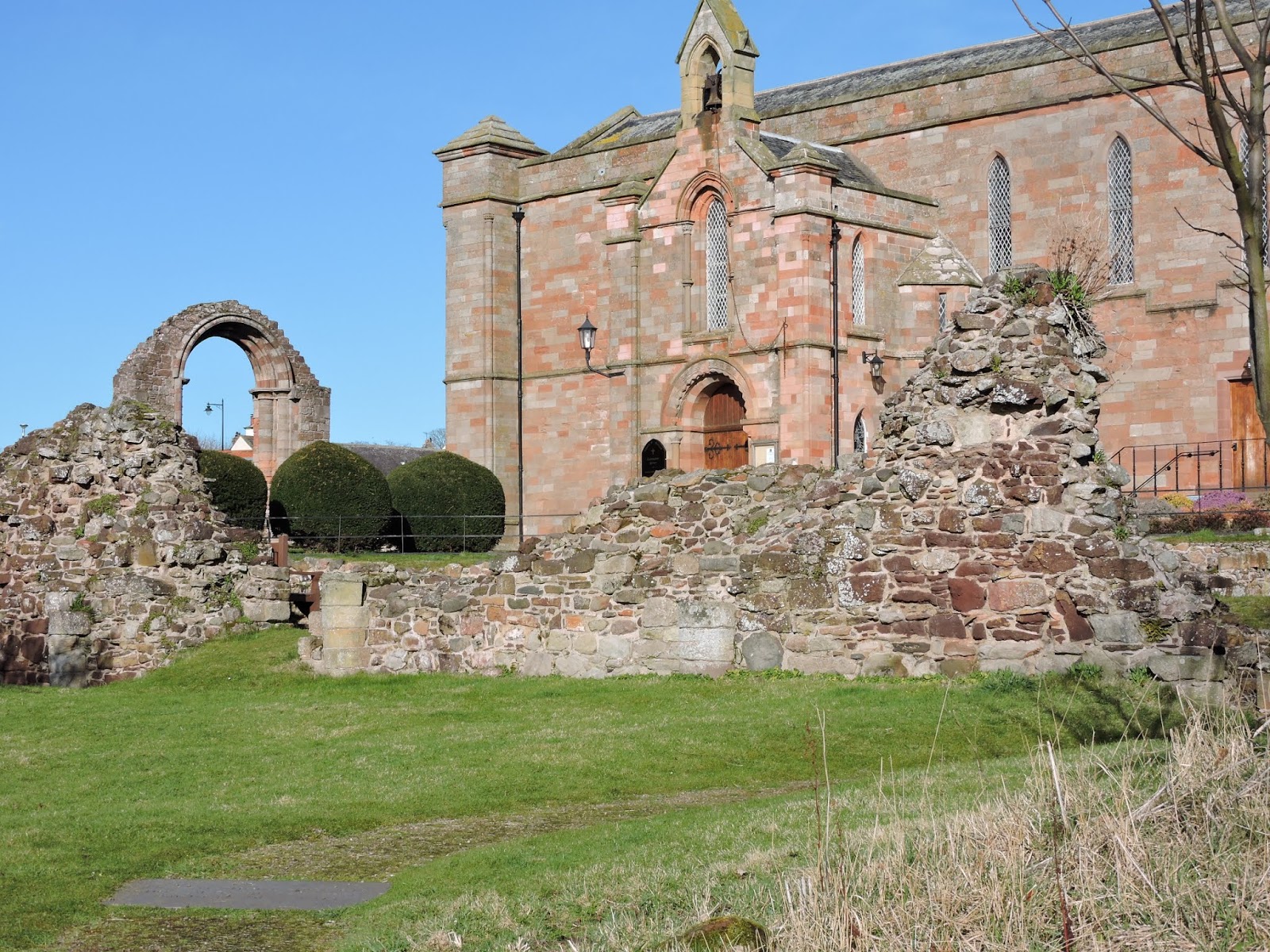
Present day Priory and medieval ruins

The results are back. Our dig in the Glebe field on the seaward side of the Priory unearthed a huge number of animal bones: cows, deer, sheep, pigs, even chickens. (Blog 26/06/18)  Now we have the C14 dating outcome and there is no doubt we were digging a site from the 7th to 9th centuries, the time of the Anglo-Saxons and St Aebba.


Local tradition has it that her monastery was on the top of the Kirk Hill, part of the massive St Abbs Head though digs there have never unearthed any archaeological evidence.   There was an Iron Age fort there, probably the seat of the local chief possibly Colud or one of his line.
 As I said at the meeting prior to the dig, if you want to convert people to new religion, you don't ask them to walk four miles then climb a steep hill!

Kirk Hill - no place for a monastery

Aebba may well have been received at the Kirk Hill fort on her arrival as would be befitting for a Northumbrian princess and sister of the most powerful king in the area but when it came to establishing her monastery it would have been between the streams that run down the two sides of the village and at the ancient pagan holy site framed by them.
The story that she was seeking sanctuary and avoiding a forced marriage is not likely to have much substance either. If she were escaping from the Northumbrian court, she would have had to have settled a lot further away from the border than she did.  There must have been some conflation with a period in her early life when she did indeed have to flee to Dal Riada in the north-west during the dynastic struggles that resulted in the creation of Northumbria from the previous smaller kingdoms.
She was a strong woman, the sister of two kings and would have acted as an ambassador rather than a refugee.
Aebba's foundation was almost certainly overlaid by the subsequent 12th and, later 14th century buildings.
We were  digging in the area beside the encompassing vallum, the perimeter dyke or ditch that separated the sacred from the profane, the religious from the lay communities.
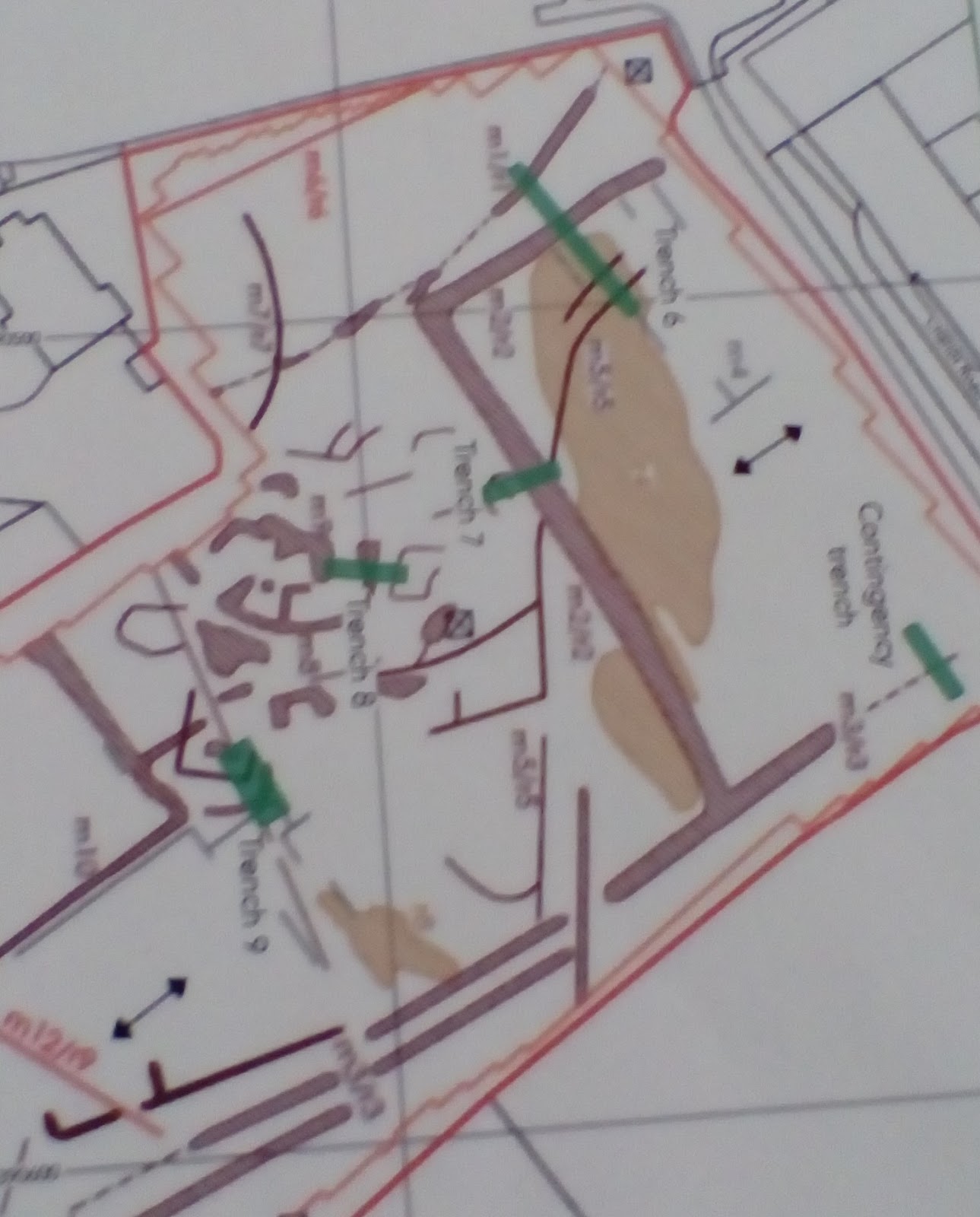
After geophysics scanning, four trenches were chosen by popular vote and we seem to have been lucky.
Trench Plan


 From the masses of bones in one trench, we seem to have hit the monastery abattoir and thus obtained good carbon dating material.
Hopefully funds can be found for other digs on the unexplored parts of the site.
We now have a vindication that our village is indeed the Urbs Coludi of Bede's Historia ecclesiastica gentis Anglorum - The Ecclesiastical History of the English People.

Coludsbyrig. Colud's burgh or town hence Coldingham in the Anglo-Saxon tongue.


Tuesday, 15 January 2019

Thoughts from a hide

Some years ago, we visited the Galapagos islands where the variation in beak sizes among the finches was a factor in Darwin's conclusion that they were all descended from a common ancestor and had developed to take advantage of the different food sources available. This led to his great work On the Origin of Species.


Castle on Lindisfarne

We have our own little Galapagos islands off the Northumbrian coast where the terns, puffins and seals breed in safety. On a recent trip to watch the wintering birds,the Brent geese, ducks and waders, it struck me that Darwin could have arrived at the same conclusion on the muddy shoreline of Lindisfarne.
Watching the waders probing the ground for food, each has a bill beautifully adapted for its particular needs, for the depth at which its prey lives and the type of terrain. The sandpiper family ranges from the turnstone with its short strong beak for flipping over stones on the beach to find food beneath to the long bills of the curlews and godwits with their sensitive tips probing soft mud for worms and invertebrates.

Turnstones

All obviously derive from an original wading bird and, further back, there was probably a common predecessor with the stilts, plovers and oystercatchers.


They are monophyletic, all coming from the same distant ancestor bird that picked up scraps from the ground after it had evolved from an even more remote reptilian creature. 

Surf coming in on the shore with Bamburgh Castle in the background
 
Did Darwin have to sail to the other side of the world to see what was under his and everyone else's nose? The voyage probably just clarified what he had been thinking about prior to his trip but would it have received the same acclaim if he just popped along to his nearest seashore or just observed our native finches from hawfinch to crossbill?

 P.S. On the day I was watching the Brent geese on Lindisfarne, another much more experienced and better equipped observer was doing the same and apparently spotted the tag on a goose that showed it was 23+ years old and had flown 100,000 miles in annual migrations !

  https://www.thetimes.co.uk/article/holy-island-s-old-goose-has-flown-total-of-100-000-miles-9gz0mqj3k?shareToken=af6d44ac5726642cc2111dd04e51ddc8 

Sunday, 6 January 2019

The Flo'ors o' the Forest


Flodden monument

 A cold winter's day for a walk around a bleak windswept hillside is not the most enjoyable of outings but it seemed fitting for a visit to the site of the bleakest day in Scottish history.

Branxton Moor...Flodden field...the defeat inflicted on the armies of James IV by the English forces of Catherine of Aragon acting on behalf of her husband Henry VIII who was fighting in France defending Italy and the Pope from the French. The Scottish war wasn't even the main campaign.

Scotland had been in a "golden age" under the cultured, clever young king. The Highlands had been brought under control and diplomatic relations  had established an uneasy peace with England and support for the "Auld Alliance " with France. The arts and science flourished, seats of learning were established and enhanced. All was to be lost in the greatest blunder in the long list of blunders in Scottish governance.

James for all his attributes was not a good commander being brave but, at times, foolhardy and impetuous. In a chivalrous but unnecessary letter, he gave warning of his decision to invade. His progress was slow giving his opponents time a-plenty to prepare.
The superior force of the Scottish army was ranged on the top of Branxton Hill armed with fifteen foot long pikes which were used like a giant hedgehog allowing the schiltron to advance against an enemy which couldn't engage them behind their jagged exterior.

Looking up the slope of Branxton Hill


Looking down from the position of the Scots army.The dip between the two slopes is discernible.


After the battle had commenced, troops commanded by Lord Home on the flank had success against the English with this tactic and, encouraged by this, the main body moved down from the hill to engage the centre.
Unfortunately, they didn't know that at the foot of the slope just before the ground rose again was boggy morass into which they plunged knee-deep unable to make progress while the rest came crowding in from behind. Their wall of pikes was a now hindrance and they were slaughtered by the billhooks of the enemy.
James bravely rushed into the fray and became the last British monarch to die in battle. With him died the flower of the Scottish nobility, the clergy, the legislature, clan chiefs and nobles as well as thousands of his loyal subjects.
This left the country with an infant for king and a near collapse of the administration. A country that didn't really recover from the disaster of Flodden until James's grandson, James VI, united the warring kingdoms ninety years later.

James's body was never properly identified though Lord Dacre took what he believed to be it to London where it was embalmed but later lost during the Reformation.


The Kings Stone

There is a Neolithic or Bronze Age standing stone called the King's Stone near the A697 road to Branxton where James is said to have died but it is quite a distance from the battlefield and the brave James is almost certain to have died on Branxton Moor among his troops.

Some of the dead were buried around Branxton church


13th C chancel in Branxton church


As I walked around the battlefield, the place still a desolate emptiness about it that couldn't be entirely due to wind chill.

The drainage ditch
The line of the ditch marks the marshy killing ground of the battle

Taking the trail to the top of the hill I passed over a muddy, reedy ditch. The ditch that now drains the marshy ground between the two slopes, the ground were thousands of young men struggled to pull their feet from the clinging mud while their compatriots on the wet slope behind slithered and slid into their backs all the time wrestling with the now useless pikes. A ditch that marks the spot where they were butchered. How ironic that the Flo'ors o' the Forest were a' wede away because in 1513 there was no ditch to drain the bog
A nation devastated for want of a ditch.

Friday, 21 December 2018

Halcyon Days and Long Nights


Calm Seas

The weather has been settled for the last few days, the sea has been calm and the wind scarcely a breeze.

These are the halcyon days, the time of temperate climate around the winter solstice.

Fishing in the quiet dawn


Ovid in his Metamorphoses recorded the myth that Alcyone daughter of Aeolus, god of the winds, married to the mortal Cyex, king of Thessaly, upset Zeus and he caused a storm to drown her husband. Grief stricken, Alcyone, threw herself into the waves to join him. The gods, in compassion, changed them both into blue halcyon birds which flash over the waters. Now we commonly associate the story with the kingfisher, Alcedo atthis named after Alcyone.

But Zeus was not to be thwarted. He decreed that the birds should build their floating nests and lay their eggs in midwinter. Aeolus, master of the winds, ensured a period of gentle zephyrs at this time to help his daughter.
Thus, we have the halcyon days and, indeed it has been so for this week.


Sunrise at the Duddo Stones


The sky was overcast on the solstice day so the sunrise at 0836 hrs.was not spectacular but the setting at the Duddo stones made up for it.


Tonight, we have a full moon and the Ursid meteor shower from the region of Ursa Minor, the Little Bear. The sky is overcast so not much will be visible but the Moon appears between the clouds. We call it the Moon before Yule. The North American peoples call it the Moon of the Long Night, a much more evocative title.

The year is on the turn. The old year is gone. The tree of the month is the Yew. Green and resilient. 


The days will lengthen. Even the cold blast of January cannot stop the feeling that winter is past.


Friday, 23 November 2018

Woodland fungi


There it was. I was sure it wasn't there a day or two ago. An unseasonal warm spell and toadstools suddenly seem to appear at this time of year -
Overnight, very
Whitely, discreetly,
Very quietly
as Sylvia Plath described it with such economy of word.
This one was an ink cap, I think, though I wouldn't trust my judgement. An Ithinkcap maybe.

LotH and myself have consumed wild fungi in the past but only with some trepidation and after much book and internet searching. We have survived but it is a hazardous business. Penny Bun ceps found in a pine wood; parasol mushrooms from under a hedge; puffballs supplied by a farmer friend, sliced and dipped in egg like mushroomy french toast; we've enjoyed them all but always there was that doubt even with the obviously edible ones.  Make one mistake and it's curtains!


How did Man ever discover what was safe and indeed, good to eat and what was not? Are we indebted to long-forgotten Palaeolithic heroes who tried and tasted and survived... or didn't?
Perhaps there should be a statue to the unknown fungi eater who paved the way.
Thank goodness for greengrocers and mushroom farmers.

 Deadly fly agaric ...one to avoid!!